

Step 1: Draw a small line with a lump in the middle to make your swallow-tailed kite's head.

Step 2: Add the eyes and beak.

Step 3: Next, draw the wing. Draw the longer and wider wing piece first. Make your line slightly wavy and add feathery tips. Now draw the smaller part of the wing, making the line wavy, too.

Step 4: Then draw the wing on the other side. You've got the hang of it now!

Step 5: Now make the tail. Draw a V shape to finish the bird's body, then draw a wider, larger V upside down to finish the tail.

Step 6: Draw two ovals and color them in for the bird's legs and you've finished your swallow-tailed kite! To color it, the body of the bird and smaller section of wing is white, and the larger section and tail are black.
Interesting Facts about the Swallow-Tailed Kite
A strikingly beautiful hawk, the Swallow-Tailed Kite is famous for both its black and white coloring, its body shape, and graceful flight behavior. They appear to hang motionless in the air they will roll upside down, swoop downwards before suddenly sweeping upwards with barely a flap of their wings. Once found across much of the southeastern United States its now mostly found in Florida and a few areas of the deep south.
Did you know?
- Swallow-Tailed Kites catch most of their food while in flight, plucking the young of other birds from their nests and small creatures off of branches.
- During the first 2-3 weeks after the eggs hatch males bring food to the nest and the females feed the young.
- Swallow-Tailed Kites build their nests in the tallest pine, cypress, or cottonwood trees often 60 feet or higher
- We know little about Swallow-Tailed Kite migrations except that most fly across the Caribbean.
- Swallow-Tailed Kites eat larger food when caring for their young.
Lesson plan note: We know very little about Swallow-Tailed Kites except that they fly across the Caribbean. Give students maps of the Caribbean sea and ask them to draw their own idea of the Kites migration pattern.Southern Cassowary
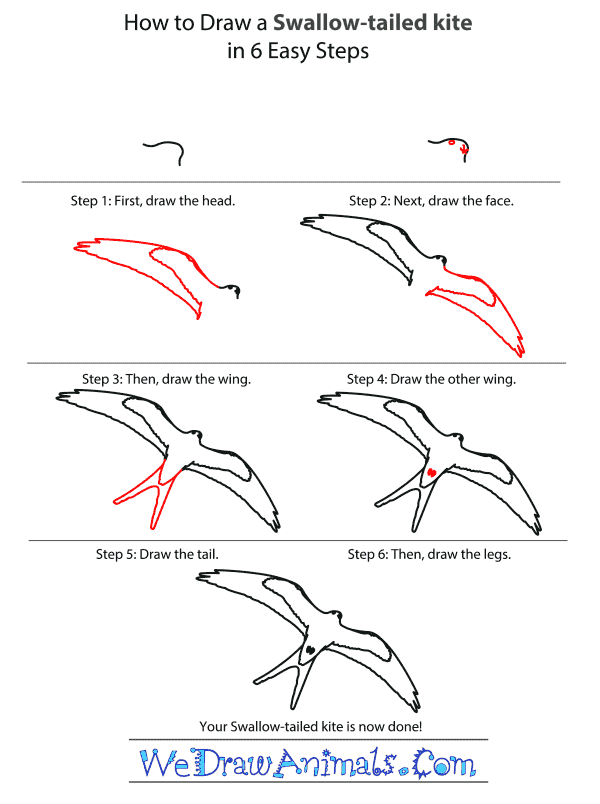
How to Draw a Swallow-Tailed Kite – Step-by-Step Tutorial